☕
Why Tea, Cakes, and Conversation Still Matter in England
Introduction: More Than Football
When people think about England, football is often the first thing that comes to mind. During the World Cup, the entire country becomes excited as fans gather to support the England national team.
But there is another side of England that visitors quickly discover.
Away from the football stadiums and cheering crowds, British people enjoy a quieter tradition that has been part of their culture for generations: tea time.
Tea is more than a drink in Britain. It is a symbol of comfort, friendship, and daily life.
The Story of Afternoon Tea
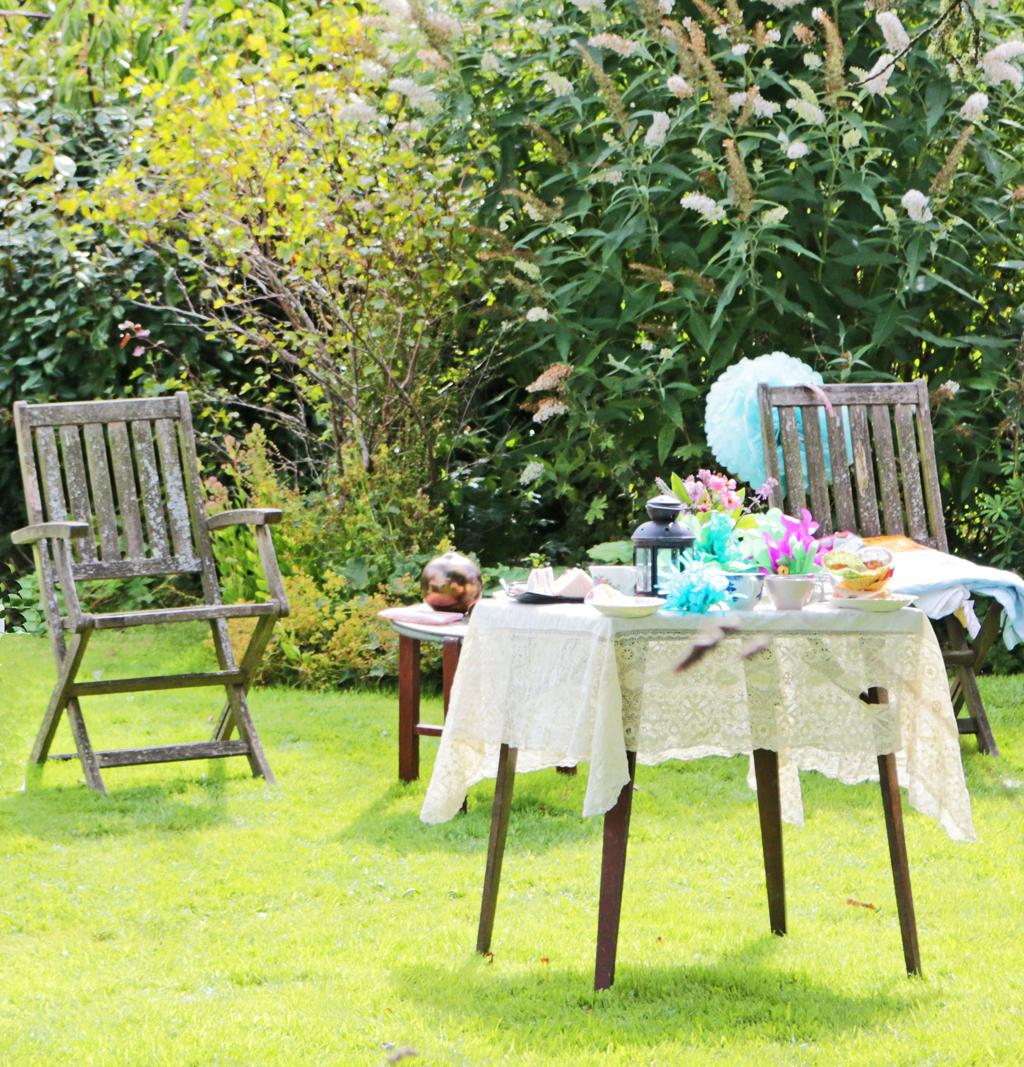
The tradition of Afternoon Tea began in the nineteenth century.
At that time, dinner was often served very late in the evening. To satisfy their hunger during the afternoon, wealthy families began enjoying tea with light snacks.
This simple habit soon became a popular social event.
Traditional Afternoon Tea usually includes:
- Black tea
- Scones with cream and jam
- Small sandwiches
- Cakes and pastries
Today, Afternoon Tea is enjoyed throughout Britain and is considered one of the country's most famous traditions.
“Would You Like a Cuppa?”
One of the most common expressions in Britain is:
“Would you like a cuppa?”
The word "cuppa" simply means a cup of tea.
Whether someone is visiting a friend, taking a break at work, or talking with neighbors, tea is often served first.
A cup of tea helps people relax and start conversations.
For many British people, sharing tea is a simple way to show kindness and hospitality.
Tea and Cakes in Everyday Life
Tea is rarely enjoyed alone.
Many people like to eat biscuits, sponge cakes, fruit cakes, or freshly baked scones with their tea.
Small local cafés throughout England often display homemade cakes in glass cabinets.
Visitors can sit by the window, enjoy a warm drink, and watch daily life pass by.
This peaceful atmosphere is one of the reasons many tourists fall in love with Britain.
The Charm of the British Countryside
Outside the big cities, tea culture becomes even more visible.
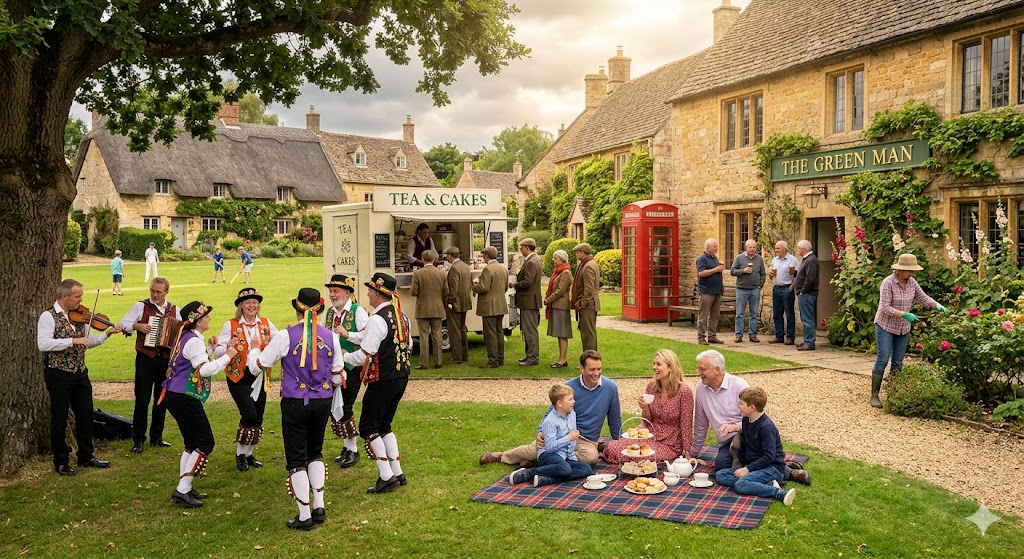
In villages across England, local festivals and garden parties often include tea-and-cake stalls.
Families gather on green lawns while volunteers serve homemade cakes and fresh tea.
These events are not expensive or luxurious.
Instead, they reflect the simple pleasures of British life:
- Friendly conversation
- Fresh air
- Homemade food
- Community spirit
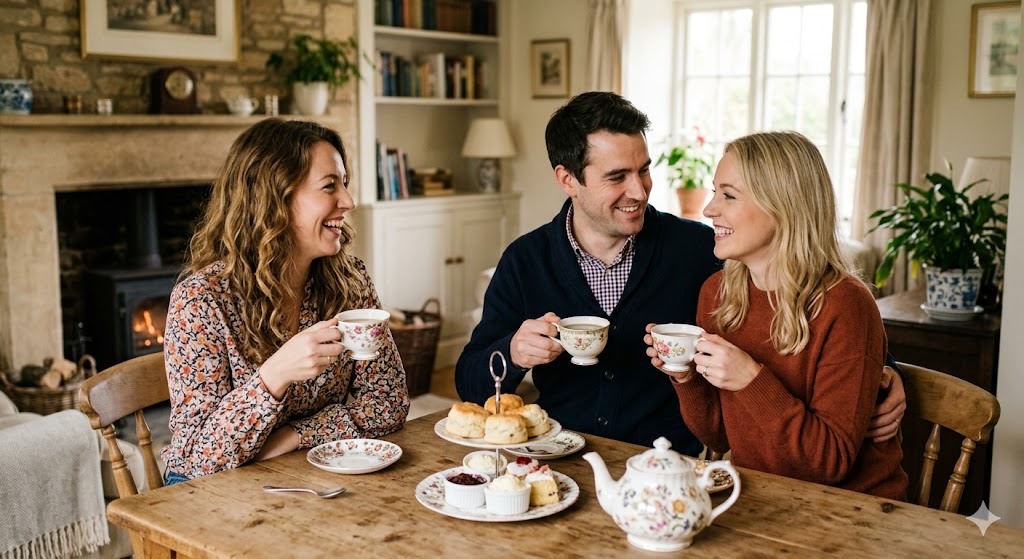
Image: Sit Down , friendly conversation
Tea as Comfort
Tea also has an emotional meaning in Britain.
When someone feels tired, worried, or sad, friends often say:
“Have a cup of tea.”
This phrase is not really about the tea itself.
It means:
“Sit down.”
“Take a rest.”
“Let's talk.”
Tea represents comfort, support, and understanding.

Sit Down Please
Football and Tea: Two Sides of British Life
At first glance, football and tea may seem very different.
One is loud and exciting.
The other is calm and peaceful.
Yet both are important parts of British culture.
Football brings people together through passion and national pride.
Tea brings people together through friendship and conversation.
Whether celebrating a World Cup victory or enjoying a quiet afternoon with family, British people value these moments of connection.
Conclusion
England is known around the world for football, but its culture is much richer than sports alone.
The traditions of Afternoon Tea, homemade cakes, and friendly conversation continue to play an important role in everyday life.
Together, football and tea reveal something important about Britain:
People enjoy excitement and competition, but they also value relaxation, community, and time spent with others.
That balance is one of the reasons British culture remains unique and admired around the world.
'English Edition > Sports>World Cup' 카테고리의 다른 글
| 푸른 하늘의 나라 아르헨티나: 메시의 라스트 댄스부터 불타는 아사도와 탱고의 선율까지(9) (0) | 2026.06.09 |
|---|---|
| ⚽ 2026 월드컵과 잉글랜드 축구 열기(7) (0) | 2026.06.06 |
| ⚽ England Football Fever and the 2026 World Cup(7) (0) | 2026.06.06 |
| 2026 북미 월드컵 브라질 우승 가능성 전력 분석! 안첼로티, 네이마르, 비니시우스가 이끄는 '헥사(Hexa)'의 꿈(5) (0) | 2026.06.05 |
| [북중미 월드컵] 멕시코와 2026 월드컵: 열정과 꿈, 그리고 타코가 가득한 축제의 나라(4) (0) | 2026.06.05 |


